
EV Charger Installation Services
- 20+ Years Combined Experience
- Licensed C-10 Electrical Contractor #1034067
- 24/7 Emergency Service
- 10-Minute Average Response to Calls & Forms
- 4.9 Rating (Google, Yelp & Angi)
Request Service
Full name, phone, and email are required — tell us as much or as little as you like.
We typically respond within about 10 minutes.
What EV Charger Installation Involves
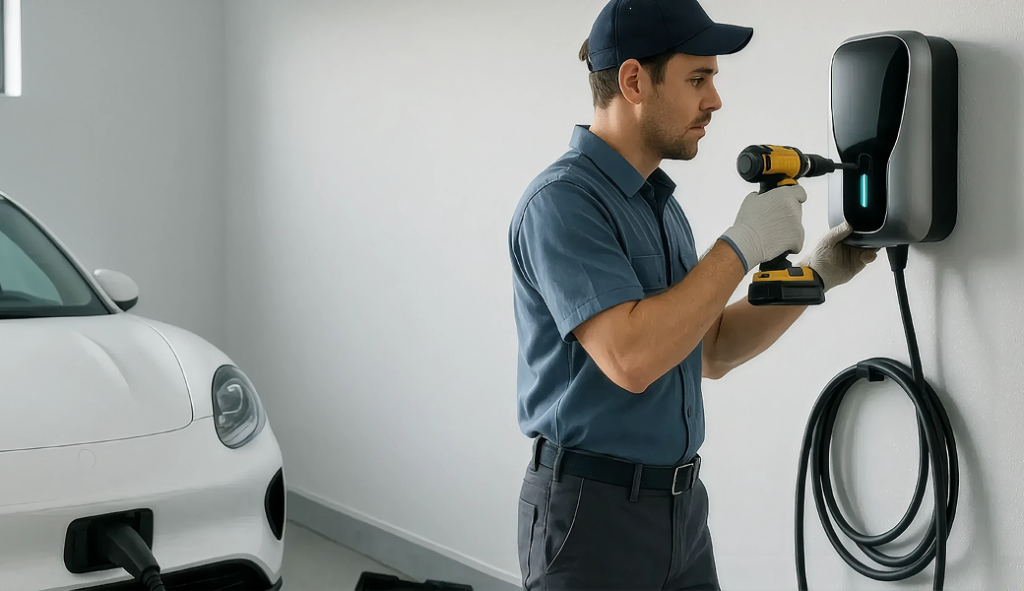
Installing a home EV charger means running a dedicated circuit from your electrical panel to the charging location, mounting the charging unit, and connecting and testing it under load. It’s more involved than plugging in an appliance: the circuit has to be sized correctly, and in most cases, the work needs a permit.
This is licensed electrical work, not something a general handyman should take on. Miswired EV circuits are a real fire risk, and getting it right the first time also means your installation is documented and inspected, which matters if you ever sell the home or need warranty support.
Questions to Answer Before You Install
A few things shape what your installation actually needs:
Which vehicle or vehicles will you be charging, and how often
Does your electrical panel have enough spare capacity
Where will the charger be mounted relative to your parking spot
Do you want app-based scheduling or load management features
Is your home part of an HOA that requires design approval
Are you planning to add a second EV or home battery storage later
The answers shape whether you need a simple Level 1 setup, a full Level 2 circuit, or a panel upgrade first, and we walk through all of this with you before recommending anything.
Level 1 vs. Level 2 Charging
Most homeowners end up choosing Level 2, since the speed difference is significant and the installation cost gap is usually smaller than people expect.
Charger Type
What It Offers
Best For
Level 1 (120V)
About 1-2.4kW, roughly 5 miles of range per hour of charging.
Plug-in hybrids or drivers with a short daily commute.
Level 2 (240V)
7-11kW, charging 4-6 times faster than Level 1; a full charge typically takes 2-10 hours.
Most full EV owners, and anyone who wants to charge overnight.
Level 2 with Smart/App Features
Same charging speed as standard Level 2, plus scheduling, usage tracking, and load management.
Homes pairing solar, battery storage, or multiple EVs on one panel.
Plug Types: It's Not Just About Tesla
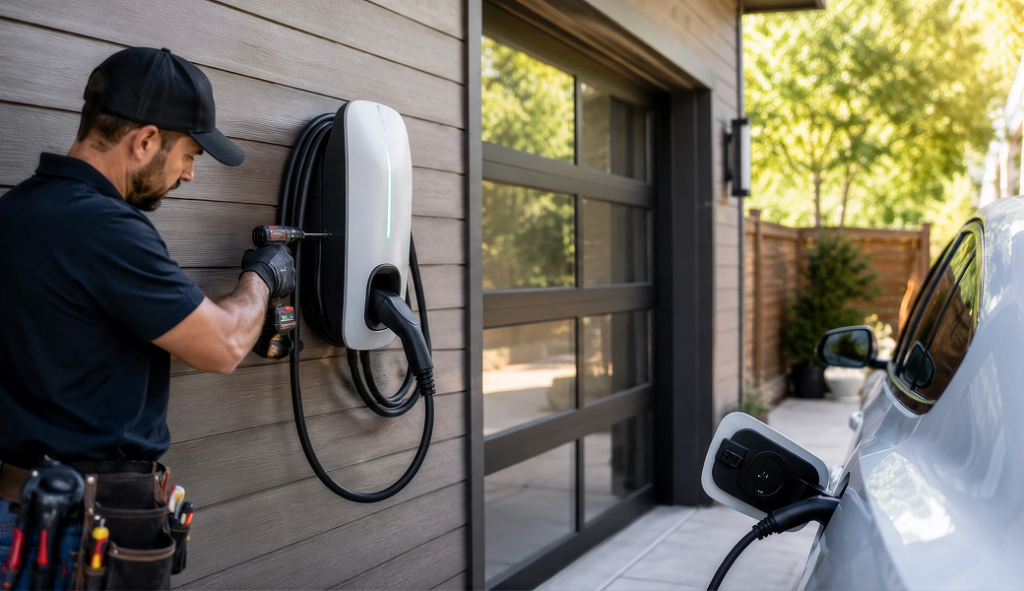
Most home installations aren’t really about picking a connector at all, they’re about matching the charger to your specific vehicle. J1772 is the standard connector for most non-Tesla EVs, while Tesla’s NACS connector is becoming the industry standard other automakers are adopting as well.
The electrical work behind the plug, meaning circuit capacity, proper wiring, and code compliance, matters far more than which connector your vehicle happens to use. We install chargers compatible with all major connector types, so you don’t need to become an expert in plug standards before calling us.
Our EV Charger Installation Process
1
Panel Capacity Check
We assess whether your existing panel has enough spare capacity for the charger you want, or whether an upgrade is needed first.
2
Circuit Design & Permit
We plan the wiring route from your panel to the charger location and pull the required permit.
3
Installation
We run the dedicated circuit, mount the charger, and connect it. Most installs are completed in a single visit.
4
Testing & Walkthrough
We test the charger under load and walk you through setup, including any app or scheduling features.
Permits & Panel Capacity in California: California requires a permit for EV charger circuits, and we handle the application and inspection scheduling as part of the job. If your panel doesn’t have enough spare capacity, we’ll tell you during the assessment. Many homes with 100A panels can still support a Level 2 charger; others need a panel upgrade first, which is a separate, clearly quoted project. See: Electric Panel Upgrade
What Affects EV Charger Installation Pricing
Pricing depends on charger level, the distance from your panel to the install location, and whether a panel upgrade is needed.
Many homes can support a Level 2 charger without any panel work at all, especially newer construction or homes already upgraded to 200A. Older homes on 100A panels, or homes already running central AC, an electric range, and other major loads, are the ones where we most often recommend a panel upgrade alongside the charger. We calculate your actual available capacity during the assessment rather than guessing from your panel’s age.
EV Charger Installation
Level 1 from $250 · Level 2 from $350
Financing available through Wells Fargo, EnerBank, and Synchrony Bank. EV charger rebates may be available through certain utility programs — see our Rebates page for what applies to you.
Proven on Real EV Charger Installations
“Got a Level 2 charger set up in my garage. Cable routing is neat, wall mount is rock solid, and my car charges twice as fast now.”
Liam D.
“Got a Level 2 charger set up in my garage. Cable routing is neat, wall mount is rock solid, and my car charges twice as fast now.”
Liam D.
Frequently Asked Questions
How long does EV charger installation take?
Most Level 2 installs are completed in a single visit, typically a few hours, longer if a panel upgrade is needed first.
Do I need a panel upgrade before installing a charger?
Not always. We check your panel’s available capacity during the assessment; many homes have enough room, others don’t.
Which charger brand should I buy?
We install ChargePoint, Tesla, Emporia, Grizzl-E, and Wallbox chargers, and can recommend one based on your vehicle and budget if you haven’t already bought one.
Are there rebates available for EV charger installation?
Some utility programs offer rebates for EV circuits, but availability depends on your specific utility territory. See our Rebates page for what may apply to you.
Related Services
Featured City Projects
EV Charger Installation Across California
Don’t see your exact city listed? Reach out anyway. There’s a good chance we already serve your area, and our coverage is always growing.