
Whole-House Generator Installation
From sizing the right generator to handling the permit and the transfer switch, we manage the entire installation so your home is ready before the next outage.
- 20+ Years Combined Experience
- 24/7 Emergency Service
- 4.9 Rating (Google, Yelp & Angi)
- Licensed C-10 Electrical Contractor #1034067
- 10-Minute Average Response to Calls & Forms
Request Service
Full name, phone, and email are required — tell us as much or as little as you like.
We typically respond within about 10 minutes.
What Whole-House Generator Installation Involves
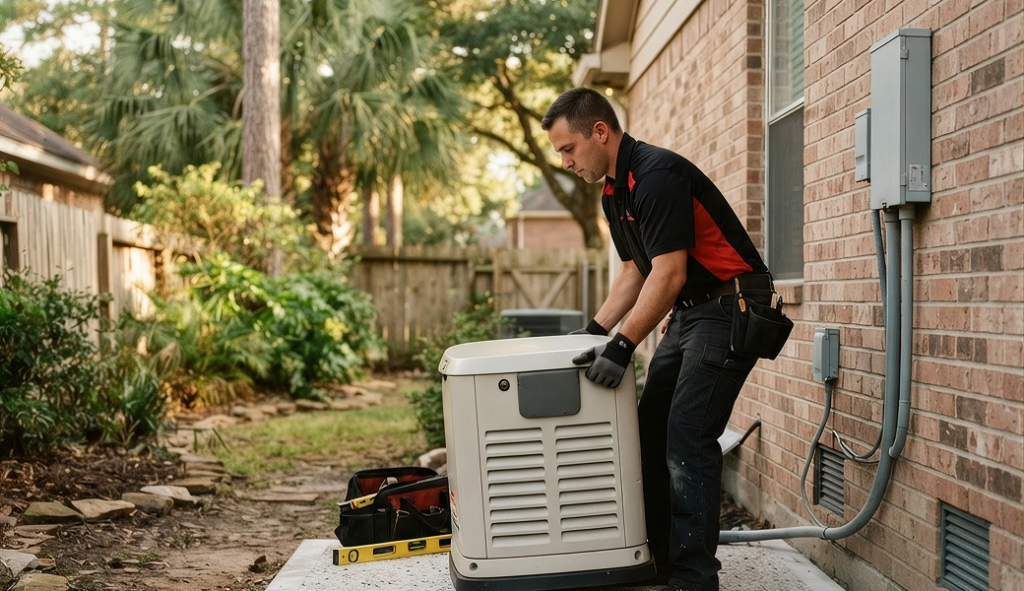
A whole-house generator installation connects a standby generator to your home’s electrical system through an automatic transfer switch, so power kicks in within seconds of an outage, without you having to do anything manually. This is different from a portable generator, which you set up and plug in yourself each time.
The work involves sizing the generator to your actual electrical load, running the fuel line (natural gas or propane), placing the unit on an approved pad, wiring the transfer switch into your panel, and pulling the required permit. It’s licensed electrical work paired with fuel-line coordination, not a weekend DIY project.
Is a Standby Generator Right for You?
A few questions shape whether a standby generator, a portable unit, or something in between makes the most sense:
How often does your area actually lose power, and for how long
Do you want to power your whole home or just the essentials
Is natural gas available at your property, or would you need propane
Are there noise or placement restrictions where you live, including HOA rules
Do you already have solar or battery storage that a generator would need to coordinate with
Is anyone in your home dependent on powered medical equipment
There’s no universal right answer here, the honest answer depends on your specific situation, and we’ll walk through it with you rather than default to the biggest unit available.
Sizing Your Generator
Generator sizing is measured in kilowatts (kW), and the right size depends on what you actually want powered during an outage, not just your home’s square footage.
We calculate this from your home’s actual electrical load during the assessment, not a general rule of thumb based on square footage alone.
Generator Size
Typically Powers
Best For
8-10kW
Essential circuits: refrigerator, some lighting, sump pump, a few outlets.
Smaller homes prioritizing critical circuits only.
14-20kW
Most of a mid-size home, including HVAC.
Most California single-family homes.
22kW+
Whole-home coverage, including central AC and major appliances.
Anyone who wants zero-compromise backup power.
It's Not Just for Wildfire Season
Standby generators are especially common in California’s wildfire-prone areas because of planned power-safety shutoffs, but that’s one reason to have one, not the only one. Storms, grid instability, and simple aging infrastructure cause outages everywhere in the state, not just in fire-risk zones.
A generator is just as valid a decision for a home office that can’t afford downtime, a household with someone on powered medical equipment, or anyone who’s tired of losing the contents of their freezer every time the power blinks. You don’t need a wildfire-adjacent address to justify one.
Our Generator Installation Process
1
Sizing & Site Assessment
We calculate your home’s electrical load and identify the right spot for the generator pad based on setback and clearance requirements.
2
Permits & Fuel Line Coordination
We pull the required permit and coordinate the gas or propane line connection.
3
Installation Day
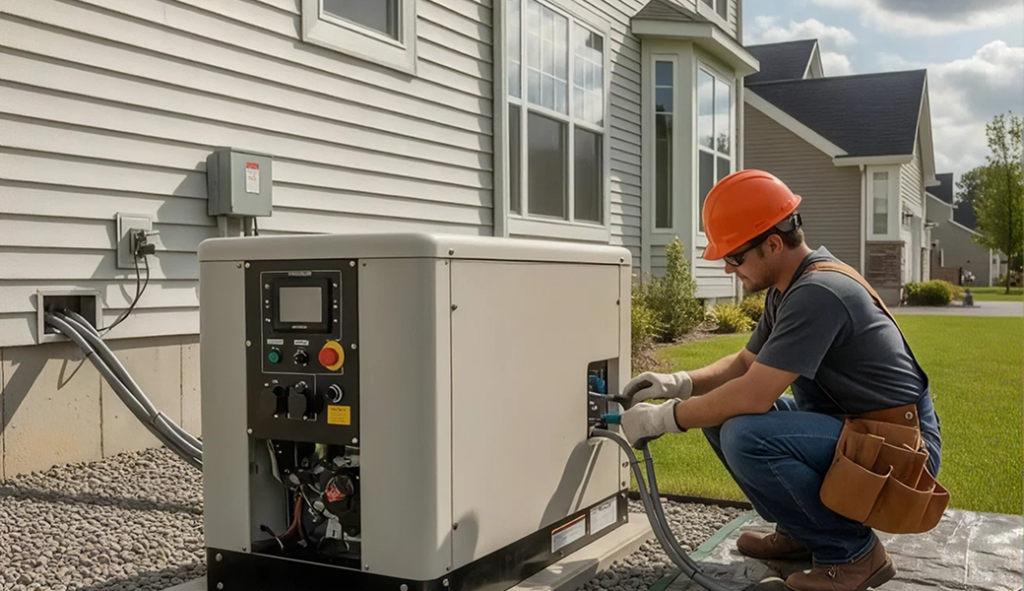
We install the pad, place the generator, wire the automatic transfer switch into your panel, and connect the fuel line.
4
Startup & Testing
We start up the unit, test the automatic transfer under a simulated outage, and walk you through how it works.
Permits & Code Compliance in California: A permit is required for a standby generator installation anywhere in California, and gas-line work typically requires separate coordination with your utility. We handle the permit application and utility coordination as part of the job, so this isn’t something you have to manage yourself.
What Affects Generator Installation Pricing
Pricing depends on generator size, fuel type, the distance from the generator to your panel and fuel source, and any pad or clearance work needed.
We install Generac, Kohler, Cummins, Briggs & Stratton, and Champion generators. Brand choice usually comes down to your budget, the specific features you want (like app-based monitoring), and local parts and service availability, and we’ll walk you through the tradeoffs rather than push one brand by default.
Whole-House Generator Installation
From $1,250
Generator installation from $1,250. Financing available through Wells Fargo, EnerBank, and Synchrony Bank.
Proven on a Real Generator Installation
“Set up our standby generator with an automatic transfer switch. Power went out during a storm last week and kicked on within seconds. Worth every penny.”
Travis Q.
“Set up our standby generator with an automatic transfer switch. Power went out during a storm last week and kicked on within seconds. Worth every penny.”
Travis Q.
Frequently Asked Questions
What size generator do I need?
It depends on which circuits you want powered during an outage, not just your home’s size. We calculate this during the assessment.
Do I need a permit?
Yes, a permit is required anywhere in California, and we handle the application as part of the job.
How long does installation take?
Most installations take one to two days, depending on generator size and any gas-line or pad work needed.
Can a generator run my whole house, or just the essentials?
Both are options. A properly sized whole-house unit can cover everything including central AC; a smaller unit can be set up to prioritize essential circuits only.
Related Services
Featured City Projects
Generator Installation Across California
Don’t see your exact city listed? Reach out anyway. There’s a good chance we already serve your area, and our coverage is always growing.