
Ceiling Fan Installation
A wobbling fan is usually a box problem, not a fan problem. We install with a properly rated mount so it runs balanced and quiet from day one.
- 20+ Years Combined Experience
- 24/7 Emergency Service
- 4.9 Rating (Google, Yelp & Angi)
- Licensed C-10 Electrical Contractor #1034067
- 10-Minute Average Response to Calls & Forms
Request Service
Full name, phone, and email are required — tell us as much or as little as you like.
We typically respond within about 10 minutes.
What Ceiling Fan Installation Involves
Ceiling fan installation means mounting the fan to a properly rated electrical box, wiring it to a switch or remote, and balancing it so it runs without wobble or noise. The box matters as much as the fan itself: a fan needs a UL-listed box rated for at least 70 pounds of dynamic load, not the standard light-fixture box most older homes have installed.
This is licensed electrical work, particularly for retrofits, since most existing boxes in older homes were never rated to support a spinning fan’s weight and vibration.
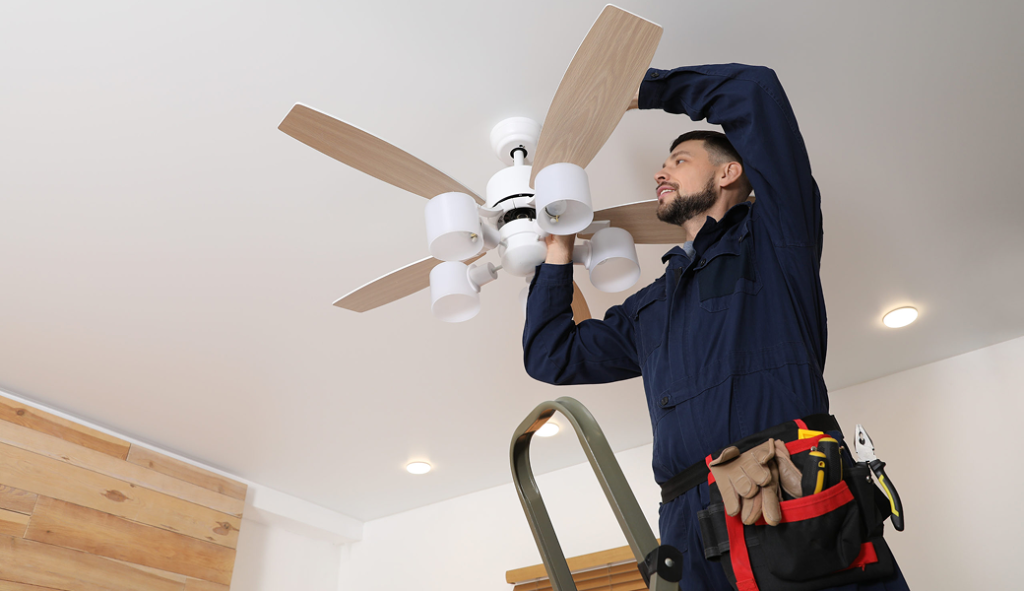
Is Your Ceiling Ready for a Fan?
A few things we check before mounting anything:
Whether the existing box is fan-rated, most older retrofit boxes aren't
Ceiling height, for proper blade clearance from the floor
Room size versus fan blade span
Wall switch, pull chain, or remote and smart control preference
Whether you're replacing a light fixture with a fan-light combo
Indoor, damp, or wet rating needed, especially for covered patios
Choosing the Right Fan Size
Fan size should match room size, not just personal preference:
Room Size
Recommended Blade Span
Typical Spaces
Small (under 144 sq ft)
Under 42 inches
Bathrooms, small bedrooms, utility rooms
Medium (144-225 sq ft)
44-50 inches
Medium bedrooms, kitchens, dining rooms
Large (225+ sq ft)
50 inches and up
Master bedrooms, family rooms, great rooms
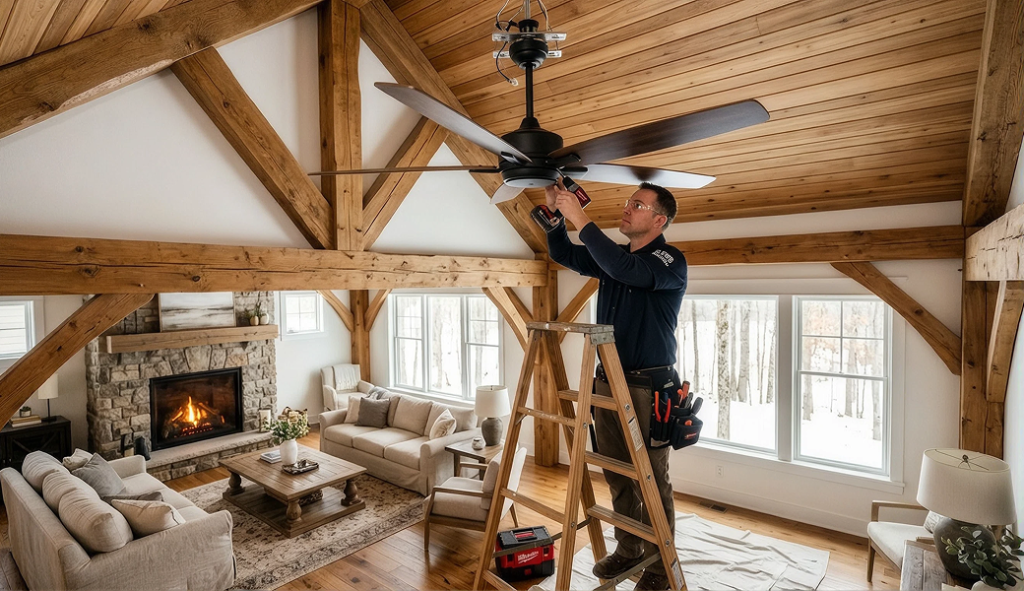
Most Wobble Problems Aren't the Fan's Fault
A wobbling ceiling fan usually gets blamed on the fan itself, buy a better brand, get it balanced, and so on. In most older-home retrofits we see, the real issue is the mounting box: a standard, non-rated plastic box simply isn’t built to handle a fan’s ongoing weight and vibration, no matter how well the fan itself is balanced.
That’s why we replace the box with a UL-listed, 70-pound dynamic load steel fan box on most retrofit jobs, a real structural fix rather than a cosmetic one, and a meaningful difference versus handyman installs that skip this step.
Our Ceiling Fan Installation Process
1
Box Inspection & Upgrade
We check whether the existing box is fan-rated and replace it with a UL-listed steel box if it isn’t.
2
Mounting & Wiring
We mount the fan and wire it to your switch, remote, or smart control setup.
3
Balancing
We balance the blades so the fan runs smooth at every speed, not just the lowest setting.
4
Testing at Full Speed
We test the fan at full speed before we leave, since wobble often only shows up there.
Permits for Ceiling Fan Installation: A permit typically isn’t required for installing a ceiling fan on an existing circuit and switch. If your project adds a new circuit or switch location, that portion of the work does require one.
What Affects Ceiling Fan Installation Pricing
Pricing depends mainly on whether the existing box needs to be upgraded to a fan-rated box, ceiling height, and whether new wiring or a switch is needed.
Ceiling height determines mount type: standard 8-9 foot ceilings usually work fine with a flush mount, while higher or vaulted ceilings need a downrod to bring the fan to the right height for effective airflow. Covered patios and other exposed locations need a damp- or wet-rated fan, a standard indoor fan won’t hold up outdoors. We’ll confirm the right option for your space before ordering anything.
Ceiling Fan Installation
From $80
Ceiling fan installation from $80.
Proven on a Real Ceiling Fan Installation
“Mounted two heavy ceiling fans in rooms with high ceilings. Zero wobbling, perfectly balanced, and super quiet.”
Diana P.
“Mounted two heavy ceiling fans in rooms with high ceilings. Zero wobbling, perfectly balanced, and super quiet.”
Diana P.
Frequently Asked Questions
Do I need a permit for ceiling fan installation?
Usually not, if the fan runs on an existing circuit and switch. A permit is required only if new wiring or a new switch location is added.
Can any ceiling support a fan?
Not without the right box. Most older homes have a standard light-fixture box that isn’t rated for a fan’s weight and vibration; we upgrade it to a fan-rated box as part of the installation when needed.
How long does installation take?
A single fan installation with an existing rated box typically takes under an hour; a retrofit that needs a box upgrade takes a bit longer, usually one to two hours.
Can you replace a light fixture with a ceiling fan?
Yes, this is one of our most common jobs. We’ll confirm the existing box is fan-rated (or upgrade it) as part of the swap.
Related Services
Ceiling Fan Installation Across California
Don’t see your exact city listed? Reach out anyway. There’s a good chance we already serve your area, and our coverage is always growing.