
Knob-and-Tube Wiring Replacement
If your insurance company flagged old knob-and-tube wiring, or you’re not sure whether your home still has it, we can inspect, explain, and replace it.
- 20+ Years Combined Experience
- 24/7 Emergency Service
- 4.9 Rating (Google, Yelp & Angi)
- Licensed C-10 Electrical Contractor #1034067
- 10-Minute Average Response to Calls & Forms
Request Service
Full name, phone, and email are required — tell us as much or as little as you like.
We typically respond within about 10 minutes.
What Knob-and-Tube Wiring Is
Knob-and-tube wiring is an electrical system used in homes built roughly before 1950, named for the ceramic knobs that anchor the wires and the ceramic tubes that protect them where they pass through framing. It has no ground wire, and its rubber-cloth insulation becomes brittle with age.
Having it doesn’t automatically mean your home is unsafe, plenty of knob-and-tube systems have functioned for decades without incident, but it’s a documented risk factor that insurance companies pay close attention to, which is usually what brings someone to this page in the first place.
Signs Your Home May Still Have It
A few clues suggest knob-and-tube wiring may still be active in your home:
Your home was built before 1950
You can see ceramic knobs or tubes in an unfinished attic or basement
Your outlets don't have a third (ground) prong slot
You still have a fuse box instead of a modern breaker panel
Your insurance company has flagged it or asked about your wiring type
You're buying or selling a pre-1950s home
Why Insurance Companies Flag It
Insurers treat knob-and-tube wiring as a risk factor for specific, documented reasons, not as a blanket judgment against older homes:
Insurer Concern
Why It Matters
What We Do
Fire risk from aged insulation and no ground wire
Increases claim risk on older homes with active knob-and-tube circuits.
A full, permitted replacement brings the home up to current code.
Some insurers decline or add a surcharge
Can mean real coverage gaps or a higher premium.
A completed, permitted job gives you documentation your insurer can point to.
Some insurers require replacement before binding a policy
Can delay closing on a home purchase or sale.
We can often prioritize scheduling around real estate deadlines.
Is Knob-and-Tube Wiring Actually Dangerous?
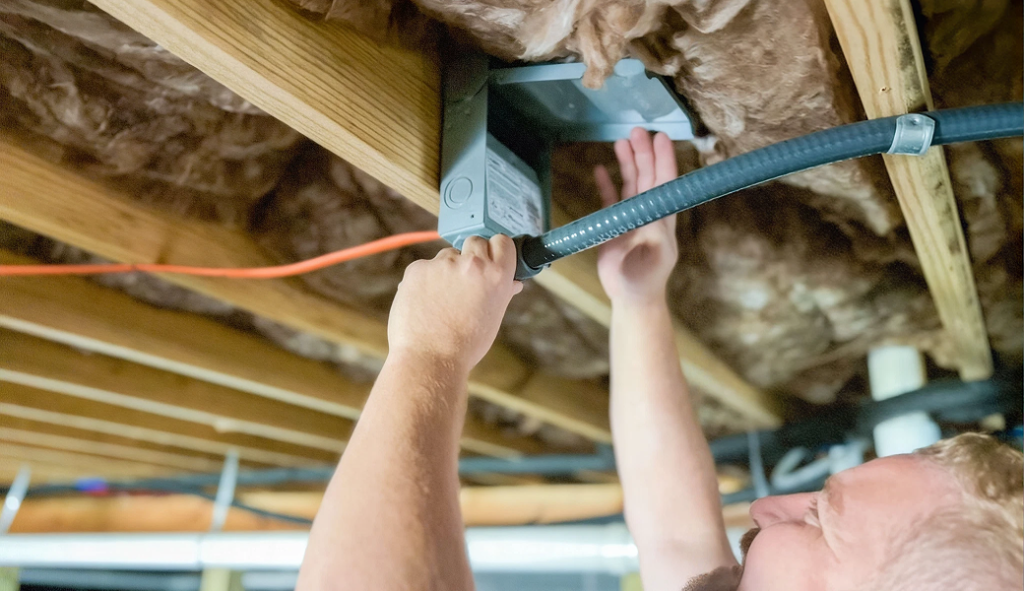
The honest answer is: it depends on condition, not just presence. The real risk factors are brittle, cracked insulation from age, past unauthorized splices or additions, and the lack of a ground wire, not the fact that a home has knob-and-tube wiring at all. A well-maintained system in an untouched attic is a different situation from one that’s been added to or damaged over decades.
That’s also why this usually isn’t an emergency call. Most homeowners come to this page because of an insurance requirement or a planned renovation, not because something is actively wrong. If you are seeing warning signs like a burning smell or scorch marks, that’s a different, more urgent situation, see our Emergency Electrician page.
Our Knob-and-Tube Replacement Process
1
Inspection & Scope
We identify exactly where knob-and-tube wiring is still active and scope the replacement, whether that’s the whole home or specific circuits.
2
Permits
We pull the required permit before any work begins.
3
Rewiring
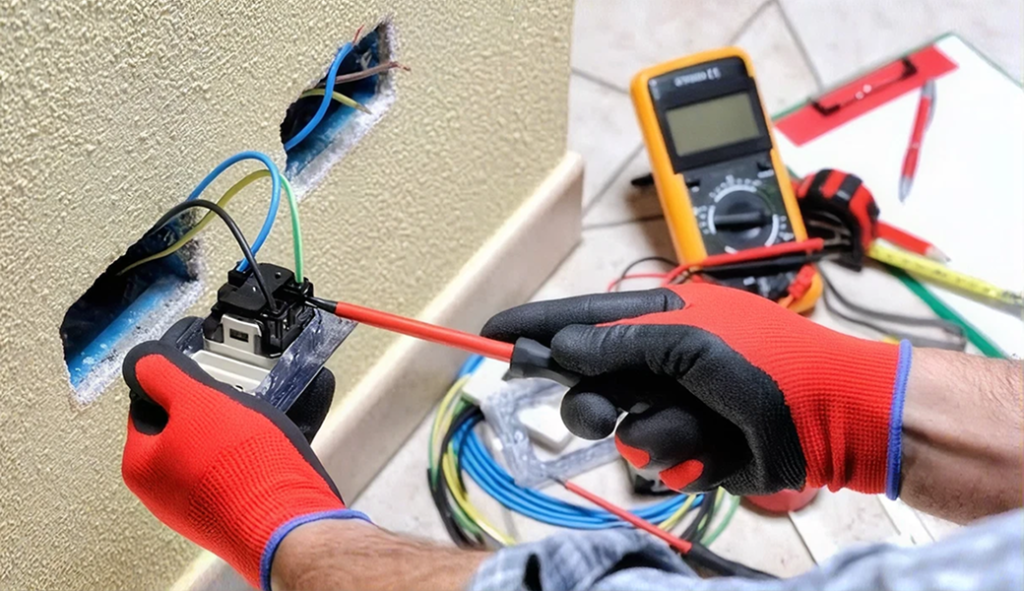
We replace the old wiring with modern, grounded copper wiring, room by room or as a full-house rewire depending on scope.
4
Final Inspection & Documentation
We coordinate the city inspection and provide the documentation most insurers ask to see.
Permits & What Your Insurer Will Want to See: A permit is required for knob-and-tube replacement in California, and we handle the application and inspection scheduling. Once the work passes inspection, you’ll have documented, permitted proof of the replacement, exactly what most insurance companies ask for when reviewing or renewing a policy on an older home.
What Affects Replacement Pricing
Pricing depends primarily on how much of the home still has active knob-and-tube wiring and how accessible it is (finished walls take longer than an open attic).
Many insurers won’t issue or renew a policy on a home with active knob-and-tube wiring, or will require replacement as a condition of coverage. This varies by carrier and by state, so the most reliable path is checking directly with your insurance company, but getting ahead of the replacement protects both your home’s safety and its insurability either way.
Knob-and-Tube Wiring Replacement
From $4,500
Knob-and-tube wiring replacement from $4,500.
Proven on a Real Knob-and-Tube Replacement
“Buying an older home meant dealing with scary knob & tube wiring. These guys upgraded the entire house safely and efficiently.”
Beatrice U.
“Buying an older home meant dealing with scary knob & tube wiring. These guys upgraded the entire house safely and efficiently.”
Beatrice U.
Frequently Asked Questions
How much does knob-and-tube wiring replacement usually cost?
Pricing starts from $4,500 and depends on how much of the home is affected and how accessible the wiring is. See our blog for a more detailed cost breakdown.
How long does replacement take?
A full-house replacement typically takes 3 to 7 days; partial or single-circuit replacements are faster.
Can I sell my home with knob-and-tube wiring still active?
You can, but many buyers’ insurers will require it to be addressed before or shortly after closing, so it’s worth planning for either way.
Do I have to replace the whole house at once?
Not necessarily. We can scope a full-house rewire or a targeted replacement of specific active circuits, depending on your budget and timeline.
Related Services
Featured City Projects
Knob-and-Tube Wiring Replacement Across California
Don’t see your exact city listed? Reach out anyway. There’s a good chance we already serve your area, and our coverage is always growing.