


Table of Contents
- Why Flickering Lights Demand Attention
- Common Causes of Flickering Lights
- Loose Neutral Connections and Panel Problems
- Flickering Lights When Large Appliances Start
- LED Bulbs and Dimmer Switch Compatibility
- Knowing When to Call a Licensed Electrician
- Taking Action to Resolve Flickering Lights
Why Flickering Lights Demand Attention
While occasional flickering may seem harmless, it often signals a deeper issue. Many homeowners search for “flickering lights in house troubleshooting” because flickering is a warning sign of underlying electrical hazards. In our experience, a loose service neutral connection can cause arcing that leads to fire risks if ignored. This dangerous condition can generate heat and spark electrical fires without warning. Similarly, overloaded electrical circuit symptoms—persistent flickering, warm outlets, and tripped breakers—indicate a system under strain that can damage appliances and wiring. Left unchecked, these conditions compromise your home’s safety and may lead to costly repairs. These are among the most common household electrical problems, and they require professional diagnosis to ensure safety and code compliance. Our licensed electricians use advanced diagnostic tools to pinpoint the exact cause and resolve it safely. We serve because we care about you and your family, and we provide exceptional electrical services. Schedule Your Service! today to restore reliable lighting and peace of mind.
Common Causes of Flickering Lights
When flickering lights in house troubleshooting, pinpointing the root cause is the first step toward a safe, comfortable home. In Los Angeles homes, flickering lights often point to issues ranging from a simple loose bulb to hidden electrical hazards that demand professional attention.
Our experience across Los Angeles shows that many flickering issues can be traced back to these common causes.
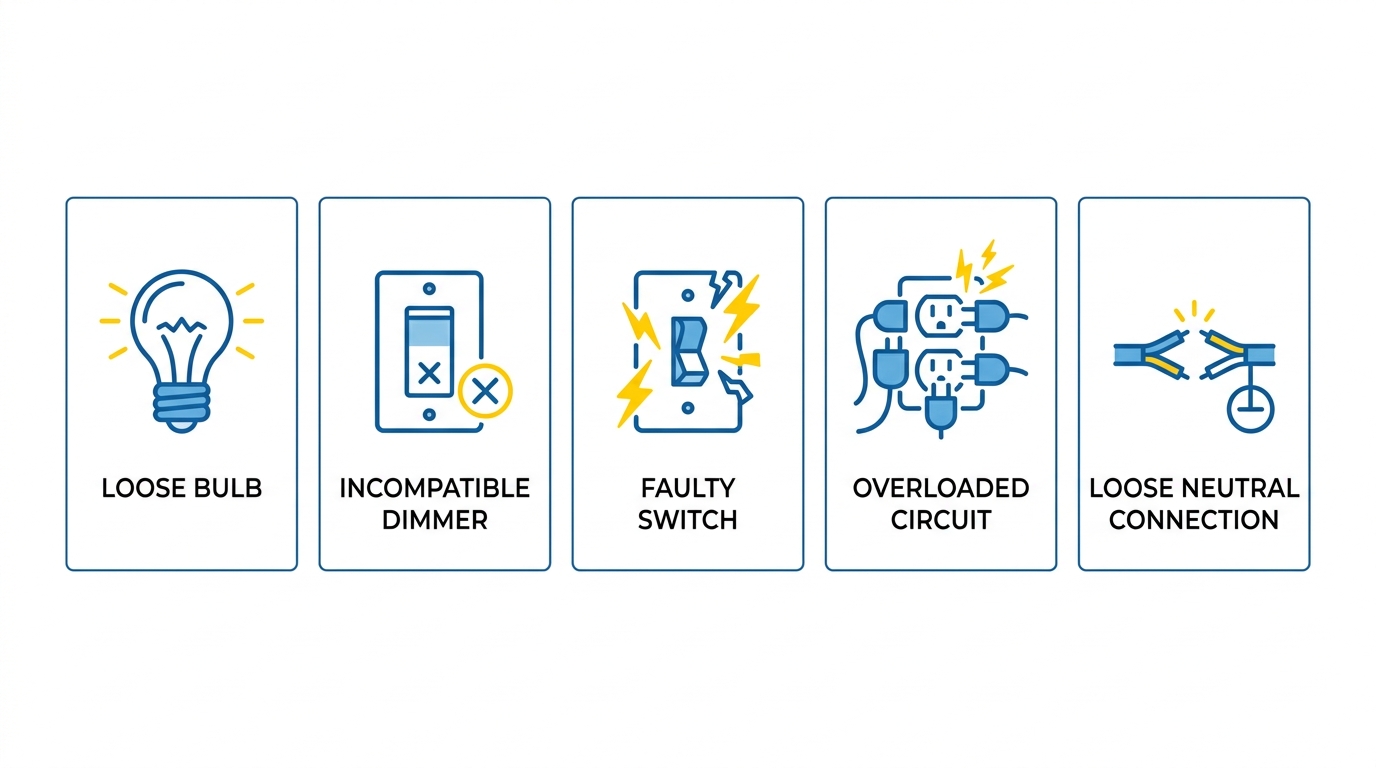
Five common causes of flickering lights illustrated in a clean infographic.
Let’s examine each of these causes in more detail.
- Loose Bulb Connections – A bulb that isn’t screwed in securely can make intermittent contact, causing noticeable flicker. Simply tightening the bulb often resolves the issue immediately.
- Incompatible Dimmer Switches – Many older dimmers are designed for incandescent bulbs and can cause LED bulbs to flicker. Upgrading to an LED-compatible dimmer typically solves the problem.
- Faulty Light Switches – A worn-out or poorly wired light switch may create unstable connections. If the flickering occurs only with a specific switch, it’s likely time to replace that component.
- Voltage Fluctuations – Large appliances like air conditioners or refrigerators can draw significant power during startup, causing temporary voltage drops that make lights flicker. Frequent, wild fluctuations may indicate a utility-side issue.
- Overloaded Electrical Circuits – Overloaded electrical circuit symptoms include flickering lights when a high-draw appliance turns on, warm outlets, or breakers that trip frequently. Distributing the load across multiple circuits can restore stable lighting.
- Loose Service Neutral connection – A loose service neutral connection is a serious condition that can cause lights to flicker unpredictably throughout the entire home. This issue demands immediate attention from a licensed electrician to prevent shock or fire hazards.
- LED Driver Issues or Bad Bulbs – Faulty LED drivers or a defective bulb can create inconsistent illumination. Replacing the bulb or the driver is often a quick fix if the fixture is otherwise sound.
Thorough flickering lights in house troubleshooting involves checking each of these areas, but when the problem persists, it’s time to call a professional. If flickering occurs in multiple rooms, it could signal a larger problem with the electrical panel or service conductors. Identifying the cause is the first step—our team provides exceptional electrical services to resolve these issues safely. When simple fixes don’t work, Schedule Your Service! We serve because we care about you and your family!
Loose Neutral Connections and Panel Problems
Another common cause of flickering lights in house troubleshooting involves loose neutral connections and panel problems. When the neutral wire becomes loose, it creates intermittent voltage fluctuations that manifest as flickering or dimming lights. Our comprehensive guide to LED light flickering causes highlights that a loose service neutral connection is especially dangerous because it disrupts the return path for electrical current. This can overheat wires, damage appliances, and pose a serious fire risk. In fact, a loose neutral often causes unbalanced voltage across the two 120‑volt legs of a home’s electrical system: some circuits may receive excessive power while others drop below normal levels. Our licensed electricians use advanced diagnostic tools to pinpoint these faults during an inspection. Because the repair involves accessing the main service panel and utility connections, we always recommend having a trained professional handle the work—it is not a DIY fix. For homeowners in Los Angeles and Orange County, our experienced team has resolved countless loose neutral connections, restoring stable and safe power.
Electrical panel problems are another frequent source of flickering lights. Overloaded electrical circuit symptoms—such as lights dimming when major appliances start, warm or discolored outlets, and breakers that trip repeatedly—indicate that a panel may be struggling to distribute current safely. When too many high‑wattage devices share a circuit, the wiring can overheat, voltage sags, and LED lights begin to flicker. Additionally, faulty breakers that fail to trip under overload conditions allow circuits to carry more current than they are rated for, while corroded or loose connections inside the panel create resistance and intermittent contact. Our safety inspections routinely uncover these hidden issues before they escalate into electrical fires. We have helped thousands of families across Los Angeles and Orange County upgrade aging panels and balance circuit loads to eliminate flickering. Because panel interiors contain live parts that pose a shock hazard, we strongly advise against any do‑it‑yourself attempts—only a licensed electrician should open and service the panel.
If flickering lights persist or you notice any of these panel warning signs, we urge you to schedule an electrical safety inspection. Our team serves Los Angeles, Orange County, and surrounding areas, bringing professional diagnostics and lasting repairs. Schedule Your Service!
Flickering Lights When Large Appliances Start
Another frequent concern homeowners notice is flickering lights when large appliances start. When you begin flickering lights in house troubleshooting, a large motor-driven appliance like an air conditioner or refrigerator is often the cause. When these motors start, they draw a surge of current up to five times their normal operating load—a phenomenon called inrush current—which causes a momentary voltage drop in the circuit. This brief dimming, lasting only one to two seconds, is completely normal and harmless.
However, if the lights continue to flicker after the appliance has started, or if multiple lights in different rooms dim simultaneously, the problem may be more serious. A loose service neutral connection can cause persistent flickering because the neutral wire is no longer stable, leading to voltage fluctuations between the two 120-volt legs in your electrical panel. This condition often affects the whole house and can damage sensitive electronics. Meanwhile, overloaded electrical circuit symptoms—such as frequently tripped breakers, warm or discolored switch plates, and buzzing sounds—indicate a circuit that is pulling more current than its wiring and breaker are rated for.
To help a professional diagnose the issue, note which appliance triggers the flicker, how long the dimming lasts, and whether it happens only on startup or throughout the appliance’s operation. If the flickering is accompanied by a burning smell, warm switch plates, or a buzzing noise, turn off the appliance immediately and call a licensed electrician—these are red flags for a dangerous wiring fault.
Even without obvious danger signs, persistent or multi-appliance flickering warrants professional inspection. A licensed electrician can measure voltage, tighten connections, and check the service entrance, panel bus, and branch circuits for loose neutrals or overloads. If you’ve already verified the appliance plug and the flickering continues, don’t wait. Our technicians adhere to the rigorous standards set by NECA electrical contractors, and we serve homes across Los Angeles and Southern California. Schedule your service today! We serve because we care about you and your family, and your electrical safety is our top priority.
LED Bulbs and Dimmer Switch Compatibility
While LEDs offer many advantages, pairing them with the wrong dimmer switch often leads to frustrating flickering. When troubleshooting flickering lights in your house, compatibility between LEDs and dimmers is the first thing to check. Not all LED bulbs work with standard dimmers, and using incompatible components can cause erratic performance.
Understanding Incompatibility
Many older dimmer switches were designed for incandescent bulbs that draw a high wattage. LED bulbs use far less power, and if the total load falls below the dimmer’s minimum rating, you’ll see low-load flickering. According to Electricians Service Team, dimmer incompatibility is one of the top causes of LED flickering because these switches lack the minimum load capacity needed to regulate current steadily. Modern LED-rated dimmers—especially trailing-edge or universal models—are engineered to handle these low loads and deliver stable dimming. Additionally, only LED bulbs explicitly labeled “dimmable” will function correctly; non-dimmable bulbs will flicker or fail to dim at all.
Part of flickering lights in house troubleshooting includes verifying your dimmer is LED-rated. While issues like a loose service neutral connection or overloaded electrical circuit symptoms may also cause flickering, dimmer mismatch remains a frequent culprit. For a comprehensive look at other possible causes, see our LED light flickering troubleshooting guide where we break down each factor.
Compatibility Checklist and Solutions
To resolve dimmer-related flickering, start by checking both your bulbs and switches. Look for the “dimmable” marking on the LED packaging and confirm the dimmer control itself carries an “LED Compatible” or “CL” rating. If either component is not rated for LED use, replace it with a compatible model. Our technicians often advise upgrading to a trailing-edge dimmer, which is purpose-built for the low wattage of today’s LED arrays. If you’re uncomfortable replacing a dimmer switch or need help rewiring, we can assist with lighting installation and outlets and switches upgrades. We provide exceptional electrical services and can ensure your dimming system operates smoothly, protecting your lights and your peace of mind.
If you’ve verified bulb and dimmer compatibility but still experience issues, continue to the next section where we address other common causes of LED flickering. We serve because we care about you and your family, and we’re here to help you maintain a safe, flicker-free home.
Knowing When to Call a Licensed Electrician
Have you noticed your lights flickering unpredictably? For effective flickering lights in house troubleshooting, it’s crucial to recognize that what might seem like a minor nuisance can signal serious electrical hazards. Attempting DIY repairs often overlooks deeper issues that require professional assessment.
Here are specific warning signs that indicate you need to call a licensed electrician:
- Persistent flickering lights: Often caused by a loose service neutral connection, this can lead to arcing and fire risk.
- Overloaded electrical circuit symptoms: Frequently tripping breakers, dimming when appliances start, or warm outlets suggest your system is overburdened.
- Warm or discolored switch plates: Heat around outlets or switches indicates internal damage.
- Burning smell: A persistent acrid odor near the panel is an emergency.
Ignoring these signs can result in catastrophic failures. Our licensed electricians can diagnose and resolve these issues quickly.
Beyond immediate fixes, a professional safety inspection provides long-term protection. Our comprehensive check identifies outdated wiring, overloaded panels, improper grounding, and other hidden dangers that could cause fires or injuries. Routine maintenance ensures your system meets the National Electric Code, preventing accidents. For older homes in Los Angeles or Orange County, a full electrical inspection is especially critical to uncover latent hazards before they become emergencies. Our technicians use advanced diagnostic tools to detect subtle issues that may otherwise go unnoticed.
In California, hiring a licensed electrician is mandatory. Before any work begins, always verify that the contractor holds an active license through the California Contractors State License Board. According to the California Contractors State License Board, over 285,000 contractors are regulated across 45 classifications, enforcing strict standards for consumer protection. As a fully licensed company (License #1034067), Electricians Service Team meets all state requirements and maintains proper insurance. We advise using the CSLB online portal to check credentials. This simple step protects you from unlicensed operators who may lack training and insurance.
If you’re noticing any of these symptoms, don’t delay. We offer free diagnostics and flexible financing to get your electrical system back on track. Schedule Your Service! We provide exceptional electrical services across Los Angeles, Orange County, and Southern California. We serve because we care about you and your family! Trust our 100% Satisfied clients.
Taking Action to Resolve Flickering Lights
When flickering lights in house troubleshooting reveals a deeper concern, it’s time to move from identifying symptoms to taking action. Start with simple checks: tighten loose bulbs and ensure plugs are fully seated. If the issue persists, flickering can signal serious underlying problems such as a loose service neutral connection or overloaded electrical circuit symptoms that demand professional diagnosis. We recommend scheduling a comprehensive electrical safety inspection to pinpoint the root cause. During the inspection, our licensed electricians will examine your panel, connections, and circuitry for signs of wear, overheating, or code violations that could lead to more serious hazards. Before hiring, verify the electrician’s license through the California Contractors State License Board (CSLB) — our technicians are fully licensed and ready to help. Schedule Your Service! Contact us today for a thorough electrical safety inspection in Los Angeles or Orange County and take the first step toward a safer home.


