


Your home electric panel is the heart of your home’s electrical system. It controls every circuit in your house — from the lights in your living room to the outlets in your kitchen — and it’s responsible for keeping your home safe from electrical fires and overloads. Most homeowners never think about their home electric panel until something goes wrong. But by the time you notice a serious problem, the damage may already be done.
Knowing the warning signs that your home electric panel needs an upgrade can save you from a dangerous electrical emergency — and in some cases, it can save your home and your family’s lives. In this guide, we’ll walk you through the 5 most important warning signs that it’s time to upgrade your home electric panel, and what to do when you spot them.
Is Your Home Electric Panel Keeping Up With Modern Demands?
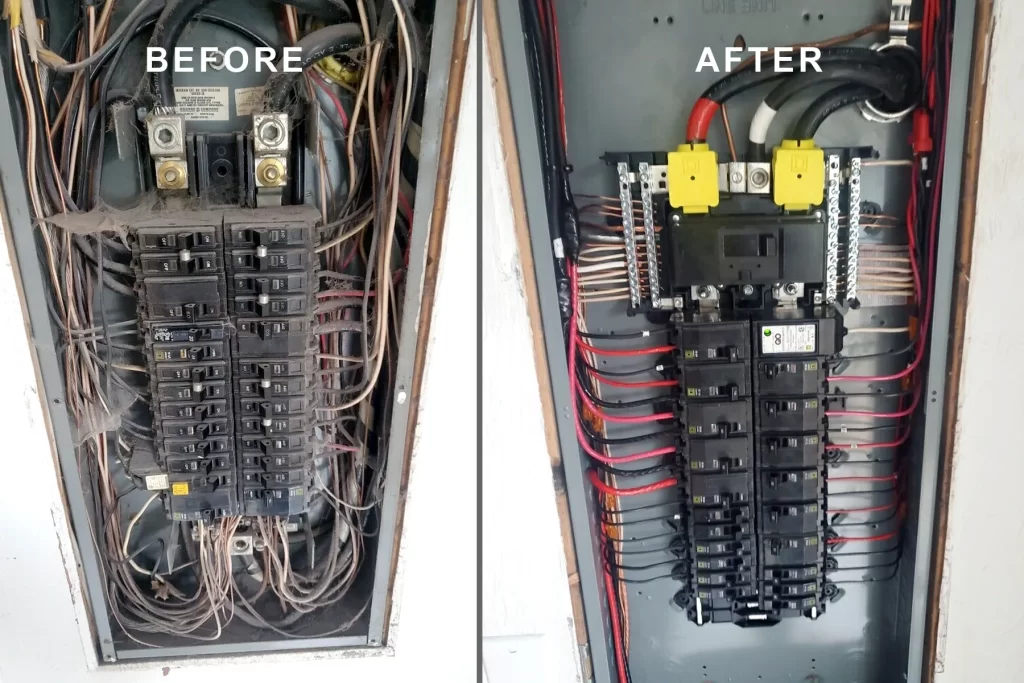
Most homes built before the 1990s were designed for a world with far fewer electrical demands. A typical home electric panel from the 1960s or 1970s might have been rated for just 60 or 100 amps — enough to power the appliances and devices of that era. Today’s homes run multiple televisions, computers, gaming consoles, smart home devices, electric vehicle chargers, and high-powered kitchen appliances simultaneously — often placing two to three times the electrical demand on a system that was never designed to handle it.
An outdated or undersized home electric panel doesn’t just cause inconvenience — it creates real safety hazards. Overloaded circuits can overheat, damaged wiring can arc, and outdated panels have been proven to fail to trip during overloads — dramatically increasing the risk of electrical fires. In fact, electrical fires account for more than 50,000 home fires in the United States every year, and a significant percentage of those fires are caused by outdated home electric panels and wiring.
Sign #1: Your Circuit Breakers Trip Frequently
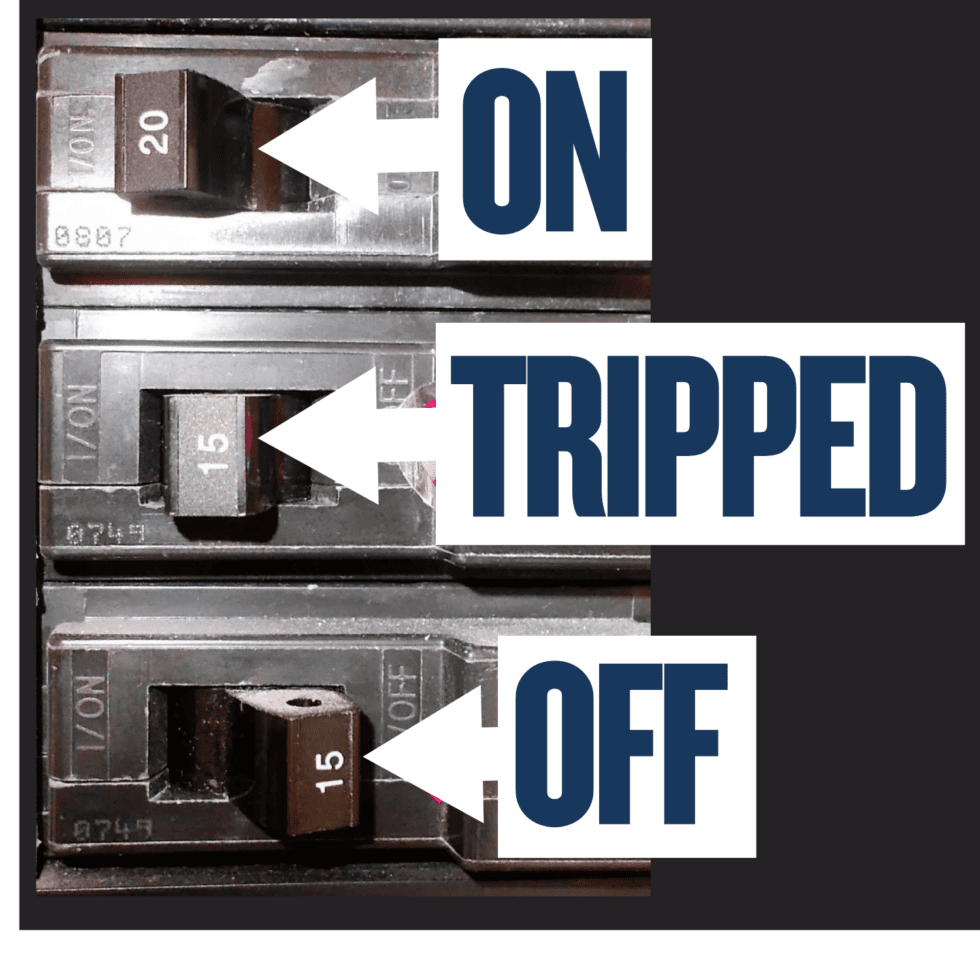
Circuit breakers are designed to trip — it’s a safety feature, not a flaw. When a circuit is overloaded, the breaker trips to cut off the flow of electricity and prevent the wiring from overheating. An occasional tripped breaker is normal. But if you find yourself resetting breakers on a regular basis — especially on the same circuits — that’s your home electric panel telling you that it can no longer keep up with your home’s electrical demands.
Frequent tripping is one of the clearest signs that your home electric panel is undersized for your current needs. As households add more high-demand appliances like air conditioners, electric dryers, EV chargers, and smart home systems, older panels simply can’t keep pace. Upgrading to a modern 200-amp home electric panel will give your home the capacity it needs to handle today’s electrical loads safely and reliably.
What to do: If your breakers are tripping more than once or twice a month on the same circuit, contact a licensed electrician for a panel assessment. Never replace a tripped breaker with a higher-amperage breaker — this bypasses the safety protection entirely and dramatically increases your fire risk.
Sign #2: Your Home Still Has a Fuse Box
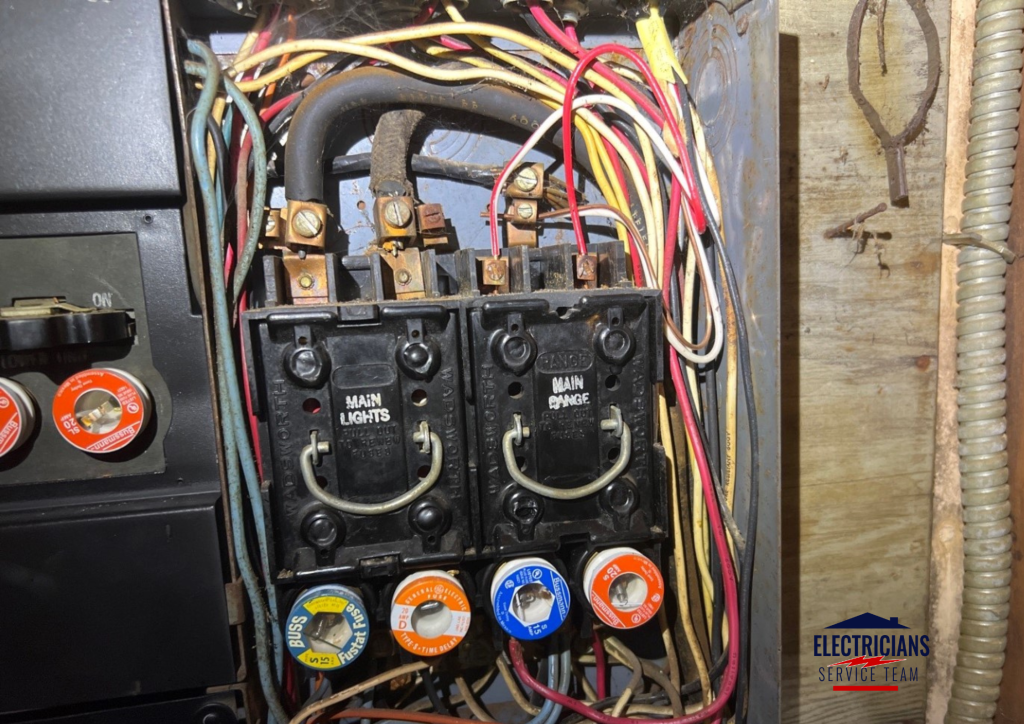
If your home still has a fuse box instead of a modern circuit breaker panel, that’s one of the strongest indicators that your home electric panel is decades overdue for an upgrade. Fuse boxes were standard in homes built before the 1960s and come with significant limitations compared to modern panels.
The biggest problem with fuse boxes isn’t the technology itself — it’s human behavior. When a fuse blows, homeowners often replace it with a fuse of the wrong amperage to stop it from blowing again. This bypasses the safety protection the fuse was designed to provide and leaves the circuit vulnerable to dangerous overloads. A modern home electric panel with circuit breakers eliminates this risk entirely.
Beyond safety, a fuse box is a red flag for homeowners insurance companies. Many insurers charge significantly higher premiums for homes with fuse boxes, and some will refuse to provide coverage at all. Upgrading your home electric panel from a fuse box to a modern circuit breaker panel is one of the best investments you can make — for safety, for insurance costs, and for your home’s resale value.
Sign #3: You Notice Flickering or Dimming Lights
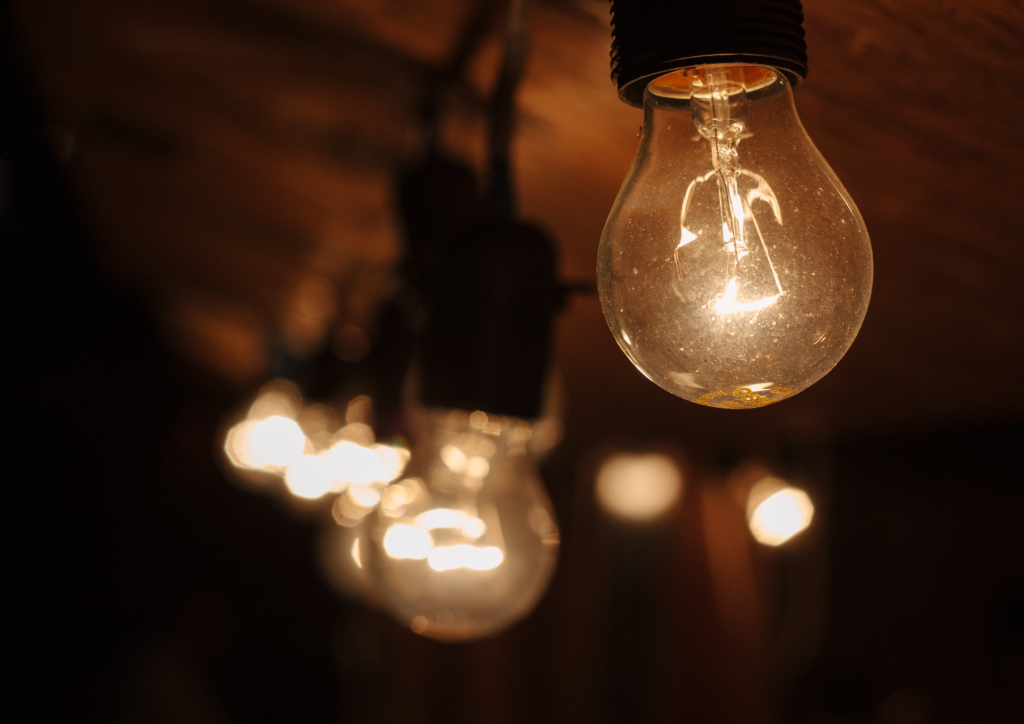
Lights that flicker or dim when you turn on a large appliance — like a washing machine, microwave, or air conditioner — are telling you that your home electric panel is struggling to distribute power evenly throughout your home. This happens when large appliances draw significant current on startup, pulling power away from other circuits that share the same panel capacity.
Occasional flickering from a single fixture is usually a minor issue — a loose bulb or a faulty fixture. But if flickering happens throughout your home, or consistently when specific appliances are running, the problem almost certainly lies with your home electric panel.
Flickering lights caused by an overloaded home electric panel aren’t just annoying — they indicate voltage fluctuations that can damage sensitive electronics and appliances over time. Smart TVs, computers, gaming systems, and other electronics are particularly vulnerable to the kind of irregular power delivery that an undersized panel produces.
What to do: If you notice persistent flickering or dimming that correlates with appliance use, contact a licensed electrician to assess your home electric panel’s capacity and determine whether an upgrade is needed.
Sign #4: You Have a Known Hazardous Panel Brand
Not all home electric panels are created equal — and some brands that were widely installed in American homes between the 1950s and 1980s have been proven to be genuinely dangerous. If your home was built during this era and has never had the electric panel replaced, you may have one of these hazardous panels still in operation.
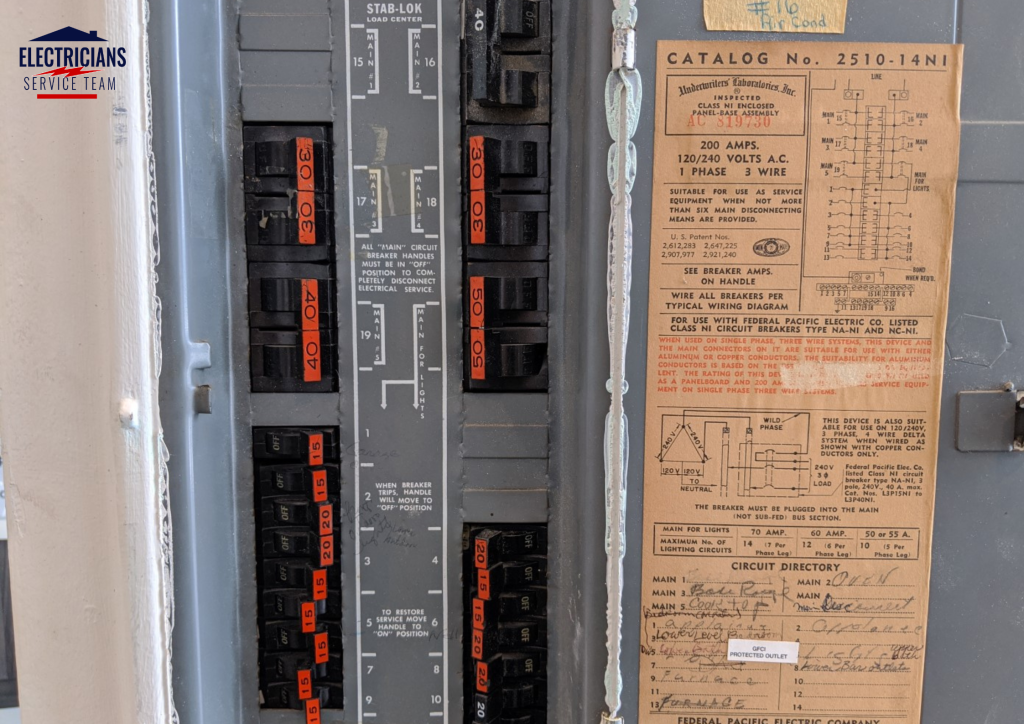
Federal Pacific Electric (FPE) panels with Stab-Lok breakers were installed in millions of American homes from the 1950s through the 1980s. These home electric panels are known for circuit breakers that fail to trip during overloads and short circuits — meaning the safety protection you rely on simply doesn’t work as intended. FPE panels have been linked to thousands of electrical fires and are considered a serious fire hazard.
Zinsco panels were common in homes built during the 1970s. These home electric panels are known for breakers that melt and fuse to the bus bar, making them impossible to trip even during a dangerous overload. Like FPE panels, Zinsco panels are considered highly fire hazardous and should be replaced immediately.
Split-bus panels, commonly installed between the 1960s and early 1970s, lack a single main disconnect breaker — meaning you cannot shut off all power to your home at once in an emergency.
If your home has any of these panels, immediate replacement is strongly recommended regardless of whether you’ve noticed any other warning signs.
Sign #5: Your Home Electric Panel Can't Support New Demands
One of the most practical reasons to upgrade your home electric panel is simply that your home’s electrical needs have outgrown its current capacity. This is increasingly common as homeowners add new high-demand systems and appliances that older panels were never designed to support.
Electric vehicle chargers are one of the most common triggers for home electric panel upgrades today. A Level 2 EV charger requires a dedicated 240-volt, 50-amp circuit — a significant electrical demand that many older 100-amp panels simply cannot accommodate without being upgraded first.
Home additions and renovations — adding a new bedroom, finishing a basement, or building an accessory dwelling unit — all require additional electrical circuits that may exceed the capacity of your existing home electric panel.
New high-demand appliances — electric ranges, tankless water heaters, central air conditioning systems, and hot tubs — all require dedicated circuits with significant amperage that older panels may not be able to safely provide.
If you’ve been told by an appliance installer or contractor that your home electric panel needs to be upgraded before they can complete their work, don’t delay. An undersized panel that’s being pushed beyond its capacity is a genuine safety hazard that gets worse over time.
What Does a Home Electric Panel Upgrade Involve?
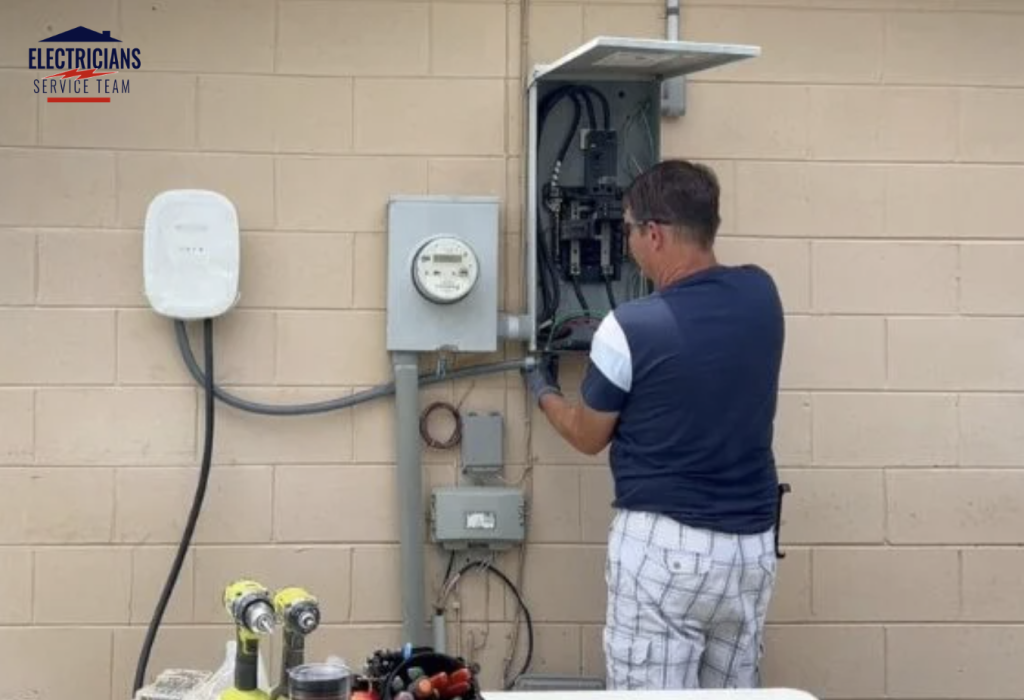
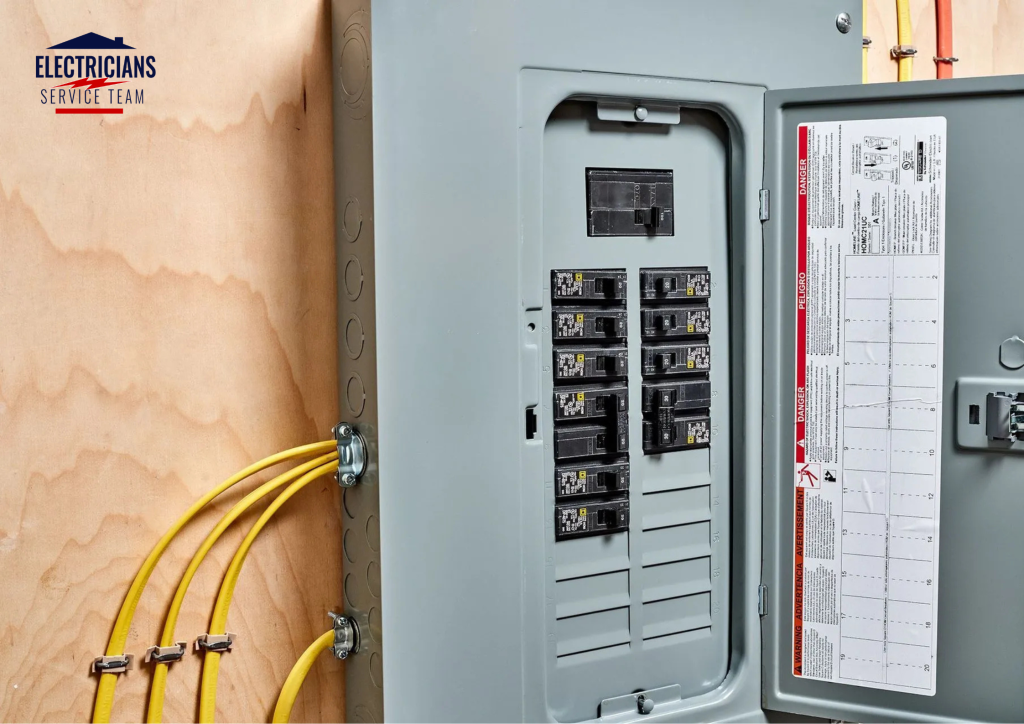
A home electric panel upgrade is one of the most impactful electrical improvements you can make to your property. The process typically involves removing the old panel and replacing it with a new, properly sized circuit breaker panel — most commonly a 200-amp panel for modern residential use. The work must be performed by a licensed electrician, requires permits, and must pass inspection before the utility company reconnects power.
The cost of a home electric panel upgrade in the Los Angeles and Orange County area typically ranges from $1,500 to $4,000 depending on the size of the new panel, the complexity of the installation, and whether any additional work such as rewiring or meter upgrades is required.
At Electricians Service Team, our licensed electricians perform home electric panel upgrades for homeowners throughout Los Angeles, Orange County, and surrounding communities. We provide free estimates, transparent pricing, and 24/7 emergency availability — because electrical problems don’t always happen during business hours.
Protect Your Home Before It's Too Late
Your home electric panel is one of those things that’s easy to take for granted — right up until it becomes a serious problem. The 5 warning signs covered in this guide are your home’s way of telling you that the system protecting your family and your property needs attention. Don’t ignore them.
If your home electric panel is showing any of these warning signs, contact Electricians Service Team today at (800) 568-8664 for a free assessment. Our licensed electricians serve homeowners throughout Los Angeles and Orange County — 24 hours a day, 7 days a week.
FAQs
The cost typically ranges from $1,500 to $4,000 in the Los Angeles and Orange County area depending on the panel size, installation complexity, and whether additional electrical work is required. Contact Electricians Service Team for a free estimate.
Most residential panel upgrades are completed in one day. The process involves removing the old panel, installing the new panel, and passing a utility inspection before power is restored.
Yes, outdated panels may struggle with seasonal loads. Modern upgrades prevent overheating and power interruptions.
For most modern homes with central air conditioning, multiple large appliances, and electronics, a 100-amp panel is generally insufficient. A 200-amp home electric panel is the current standard for modern residential use and is strongly recommended for homes planning to add EV chargers or other high-demand systems.
Yes. Home electric panel upgrades require permits and must pass inspection in California. Always work with a licensed electrician who will pull the necessary permits and ensure the work meets all local code requirements.


