

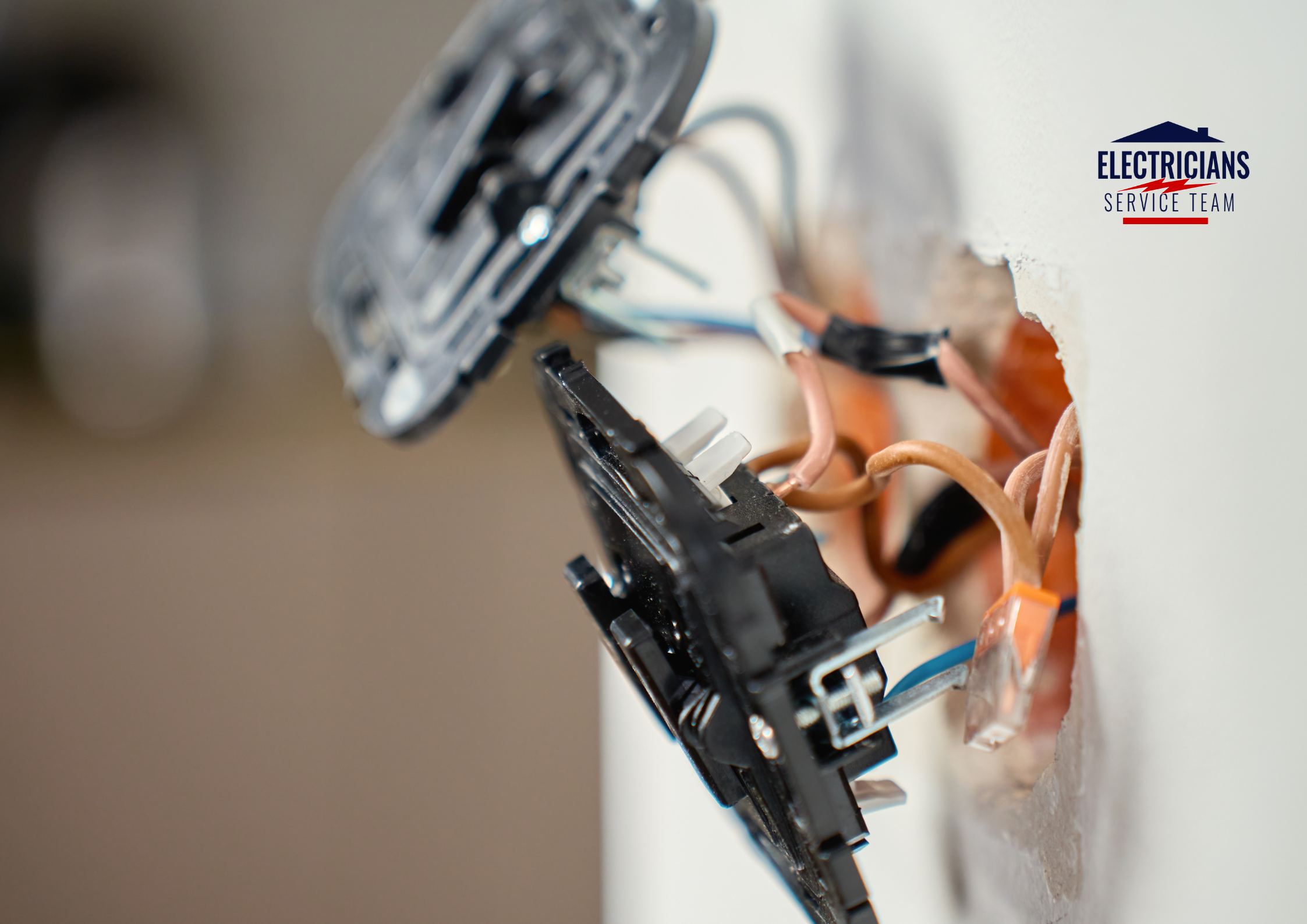
A dead GFCI outlet is one of the most common electrical complaints homeowners call us about — and in many cases, the fix takes less than two minutes. But in other cases, a dead GFCI is a warning sign of a deeper electrical problem that shouldn’t be ignored. Ground Fault Circuit Interrupter (GFCI) outlets are critical safety devices installed in areas where water and electricity could come into dangerous contact. When they trip or fail, they cut power entirely to protect you from electric shock or electrocution. Understanding why they fail and how to address the problem can save you time, money, and a potentially hazardous situation.
In this guide, our experienced electricians walk you through every step — from a simple reset to full outlet replacement — so you can confidently deal with a dead GFCI outlet and know exactly when it’s time to pick up the phone and call a professional.
What is a GFCI outlet and where are they installed?
A GFCI outlet monitors the flow of electricity through a circuit. The moment it detects even a tiny imbalance — as little as 4 to 5 milliamps — it trips and cuts the power within a fraction of a second. This rapid response is fast enough to prevent a fatal shock. By code, GFCI outlets are required in bathrooms, kitchens, garages, basements, outdoor areas, crawl spaces, and any location within six feet of a water source. They’re identifiable by the two small buttons on their face: one labeled TEST and one labeled RESET.
GFCI outlets can also be wired to protect multiple standard outlets downstream on the same circuit. This means a single tripped GFCI in your bathroom could be responsible for killing power to outlets in other rooms — a fact that confuses many homeowners and leads to unnecessary repair calls.

Common reasons a GFCI outlet goes dead
Tripped GFCI: The outlet detected a fault and cut power. A reset is all that’s needed.
Tripped circuit breaker: A breaker in the main panel has cut power to the whole circuit.
Upstream GFCI tripped: Another GFCI elsewhere in the home is protecting this outlet and has tripped.
Failed GFCI device: Internal components wear out after 10–15 years and the outlet needs replacement.
Loose or faulty wiring: Connections behind the outlet have worked loose over time.
Step 1 — Reset the GFCI outlet
Press the RESET button firmly on the face of the outlet. If it clicks and power returns, the GFCI simply tripped — you’re done. If the button won’t stay in or nothing happens, unplug all devices on that circuit and try again. A faulty appliance is often the source of the fault preventing the GFCI from resetting. If it still won’t reset, move to the next step.
Step 2 — Check your circuit breaker panel
Go to your main electrical panel and look for a breaker in the tripped position — it will sit between ON and OFF rather than fully in either position. Push it firmly to OFF, then back to ON. Return and test the outlet. If the breaker trips again right away, there is a wiring fault that needs a professional. Do not keep resetting a breaker that keeps tripping.
Step 3 — Find an upstream GFCI outlet
Check every GFCI outlet in your home — bathrooms, kitchen, garage, laundry room, and basement. Press RESET on each one. A single tripped GFCI can cut power to multiple outlets in other rooms that are wired downstream from it. This is a very common cause of multiple dead outlets throughout the home and is often overlooked.
Step 4 — Test with a voltage tester
Use a non-contact voltage tester to confirm whether electricity is reaching the outlet. If there’s no reading after checking the breaker and all upstream GFCI outlets, the outlet is confirmed dead and needs to be replaced. A voltage tester is an inexpensive tool every homeowner should have.

Step 5 — Replace the GFCI outlet
Turn off the circuit breaker and confirm power is off with your voltage tester. Remove the cover plate and unscrew the outlet from the box. Photograph the existing wiring before disconnecting anything. On the new GFCI outlet, connect the incoming power wires to the LINE terminals. The LOAD terminals are only needed if protecting downstream outlets.
Fold the wires back, secure the outlet, replace the cover, and restore power. Press RESET and test with a plug-in outlet tester. Press TEST to confirm the GFCI trips correctly, then RESET to restore power.

When to call a licensed electrician
Some situations require a professional. Call a licensed electrician if the new GFCI outlet won’t reset after installation, if you see burn marks or smell burning near the outlet or panel, if the circuit breaker keeps tripping, or if multiple outlets across your home are dead with no clear cause. Incorrect electrical work is a leading cause of house fires — when in doubt, call a professional.
How to prevent GFCI outlet failures
Test every GFCI outlet monthly using the TEST button — it should cut power when pressed and restore it on RESET. Replace any outlet that doesn’t respond correctly. Have your home’s electrical system inspected every 5 to 10 years, especially in older homes. Avoid overloading circuits, and always use GFCI outlets in damp or wet locations as required by the National Electrical Code.
FAQs
There is likely still an active fault on the circuit. Unplug all devices and try again. If it still won’t reset with nothing connected, the GFCI outlet has failed internally and needs to be replaced.
Most GFCI outlets last 10 to 15 years. Over time the internal mechanism degrades, and the outlet may fail silently — still passing power but no longer providing ground fault protection. Monthly testing is essential.
Yes. A failing GFCI outlet can continue to supply power while losing its ability to detect faults. If pressing TEST does not cut power, replace the outlet immediately — it is no longer providing protection.
Electricians often wire several standard outlets as downstream protected outlets from a single GFCI. When that GFCI trips, all protected outlets lose power. Find and reset the upstream GFCI to restore them all.
A GFCI outlet costs $15–$40. Hiring a licensed electrician for replacement typically runs $80–$200 including labor, and may be higher if additional wiring repairs are needed.


