Have you ever walked into a room and flipped the switch — only to find yourself standing in the dark? If one room in your home has no power while the rest of the house is working fine, you are dealing with a localized electrical problem. The good news is that most cases of no light in one room come down to a few simple causes that are easy to identify and fix.
In this guide we’ll walk you through the most common reasons a single room loses power, what to check first, and when to call a licensed electrician.
Why Is There No Light in One Room?
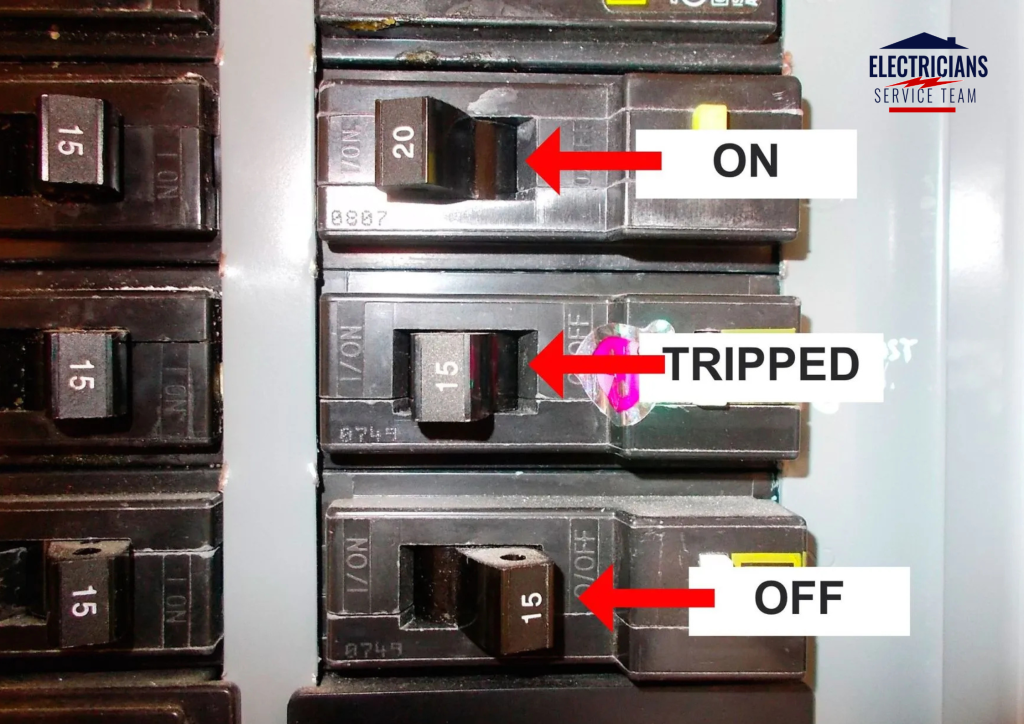
The very first thing to do when a single room loses power is head to your electrical panel. A tripped circuit breaker is the most common cause of power loss in one room and takes about 30 seconds to fix.
Here’s what to look for:
- Open your electrical panel — usually located in a hallway, garage, laundry room, or utility closet
- Look for a breaker that has flipped to the middle or “off” position, or one that looks misaligned from the rest
- A tripped breaker will typically sit between the ON and OFF positions
How to reset it:
- Push the tripped breaker firmly all the way to the OFF position first
- Then flip it back to the ON position
- Return to the room and test the lights and outlets
If the breaker trips again immediately or repeatedly, do not keep resetting it. This is a sign of an underlying electrical problem that needs professional diagnosis.
1. Tripped Circuit Breaker — Check This First
The number one cause of no power in one room is a tripped circuit breaker. Every circuit in your home is protected by a breaker that automatically shuts off when it detects an overload or fault. When a breaker trips, everything on that circuit loses power instantly.
How to check for a tripped breaker:
- Go to your electrical panel — usually found in a garage, hallway, or utility room
- Look for a breaker that has moved to the middle position between ON and OFF
- Some panels use a red or orange indicator window to show a tripped breaker
How to reset a tripped circuit breaker:
- Push the breaker firmly all the way to the OFF position
- Then flip it back to ON
- Return to the room and test the lights and outlets
If the circuit breaker trips again right away, stop resetting it. A breaker that keeps tripping is warning you about a deeper electrical problem — loose wiring, a short circuit, or an overloaded circuit — that needs a licensed electrician to diagnose and fix safely.
2. Tripped GFCI Outlet — The Most Overlooked Cause
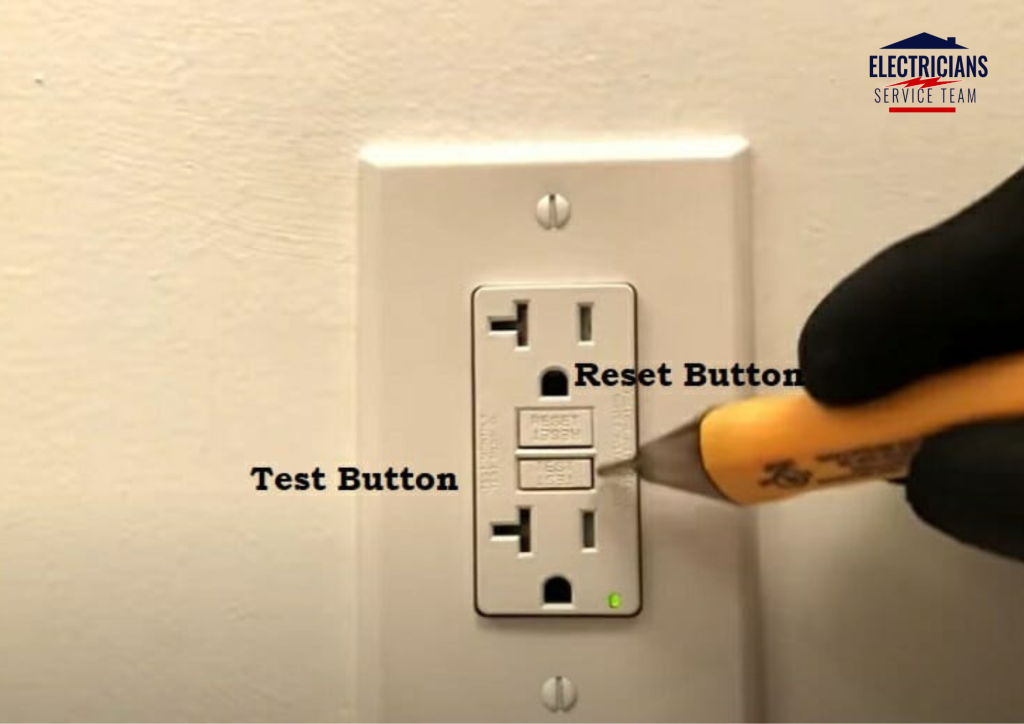
If your circuit breaker looks fine, the next thing to check is a GFCI outlet. A GFCI — Ground Fault Circuit Interrupter — is a special safety outlet with two small buttons labeled TEST and RESET on its face. You’ll find them most commonly in bathrooms, kitchens, garages, and outdoor areas.
What most homeowners don’t know is that a single tripped GFCI outlet can cut power to multiple outlets and lights in connected rooms. This means a tripped GFCI in your bathroom could be the reason your bedroom or hallway has no power.
How to find and reset a tripped GFCI outlet:
- Check all bathrooms, kitchens, and garages near the affected room
- Look for an outlet with a popped-out RESET button
- Press the RESET button firmly until you hear a click
- Go back to the room with no power and test the outlets and lights
This simple fix costs nothing and takes less than two minutes — always check GFCI outlets before calling a technician.
3. Loose or Faulty Wiring Connection
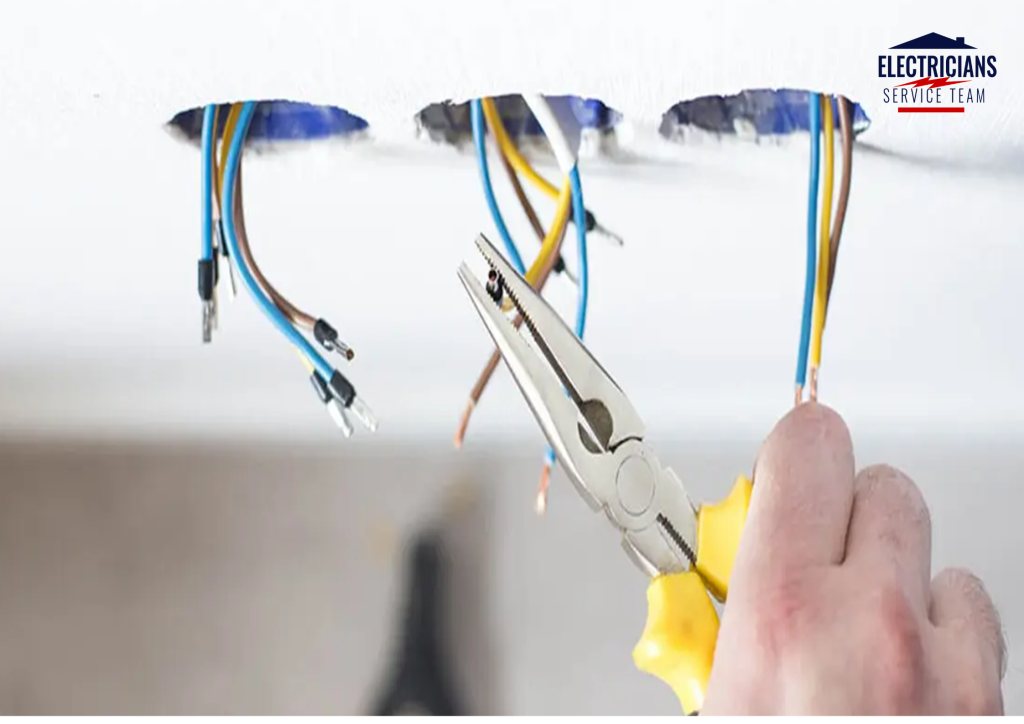
If both the circuit breaker and GFCI outlets check out, the problem may be a loose wiring connection inside an outlet or switch. Over time, wire connections can loosen due to heat, vibration, and normal wear and tear. A loose connection interrupts the flow of electricity and cuts power to everything connected downstream on that circuit.
Signs of a loose or faulty wiring connection:
- One outlet in the room doesn’t work while others do
- Lights flicker before going out completely
- An outlet feels warm to the touch or has scorch marks around it
- You hear a faint buzzing or crackling sound near an outlet or switch
Loose wiring is not a DIY fix. This repair requires a licensed electrician who can safely open the outlet box, identify the faulty connection, and restore the circuit correctly.
4. Failed Outlet or Light Switch
Sometimes the problem is as simple as a single outlet or light switch that has worn out and stopped working. Outlets and switches have a lifespan — typically 15 to 25 years — and eventually fail.
How to tell if an outlet has failed:
- Plug a lamp or phone charger into the outlet — if it doesn’t work but other outlets in the room do, the outlet itself has likely failed
- Look for discoloration, burn marks, or a cracked faceplate around the outlet
How to tell if a light switch has failed:
- The outlets in the room work fine but the lights don’t respond to the switch
- The switch feels loose, makes no click sound, or feels different from usual
Both outlet and switch replacements are quick, affordable repairs that a licensed electrician can complete in under an hour.
Quick Troubleshooting Checklist
Before calling an electrician, run through this checklist:
- Check the electrical panel for a tripped breaker and reset it
- Check all nearby bathrooms, kitchens, and garages for a tripped GFCI outlet
- Test every outlet in the affected room with a lamp or phone charger
- Look for any scorch marks, burning smells, or warm outlets
- Check if the light switch feels loose or unresponsive
If none of these steps restore power to the room, it is time to call a licensed electrician.
When to Call a Licensed Electrician
Handle the basic checks yourself — breaker reset, GFCI reset, outlet testing. But call a licensed electrician right away if:
- The breaker trips again after resetting
- You smell burning or notice scorch marks near an outlet or switch
- The affected room loses power repeatedly without an obvious cause
- Multiple rooms or areas of the home are affected
- Your home is older and has not had an electrical inspection recently
- You hear buzzing or crackling sounds from outlets or the panel
- Lights flicker or dim before going out completely
These symptoms point to wiring faults, overloaded panels, or failing electrical components — all of which pose serious fire and safety risks if left unaddressed.
FAQs
The most common reasons are a tripped circuit breaker, a tripped GFCI outlet in a connected bathroom or kitchen, a loose wiring connection, or a failed outlet or switch. Start by checking your electrical panel and any nearby GFCI outlets before calling a technician.
Most electrical panels have a directory on the inside of the door labeling which breaker controls which room or circuit. If your panel isn’t labeled, a licensed electrician can map out your circuits during a service visit.
A tripped breaker sits in the middle position between ON and OFF, or may appear slightly misaligned from the other breakers. Some panels use a red indicator window to signal a tripped breaker. Push it firmly to OFF first, then back to ON to reset it.
Watch for flickering lights, frequent breaker trips, sparks, burning smells, or hot outlets. These signs indicate potential hazards that require professional attention.
Resetting a breaker once is safe and a normal troubleshooting step. However, if the breaker trips again immediately or repeatedly, stop resetting it and call a licensed electrician — repeated tripping signals a fault in the wiring or an overloaded circuit that needs professional attention.